
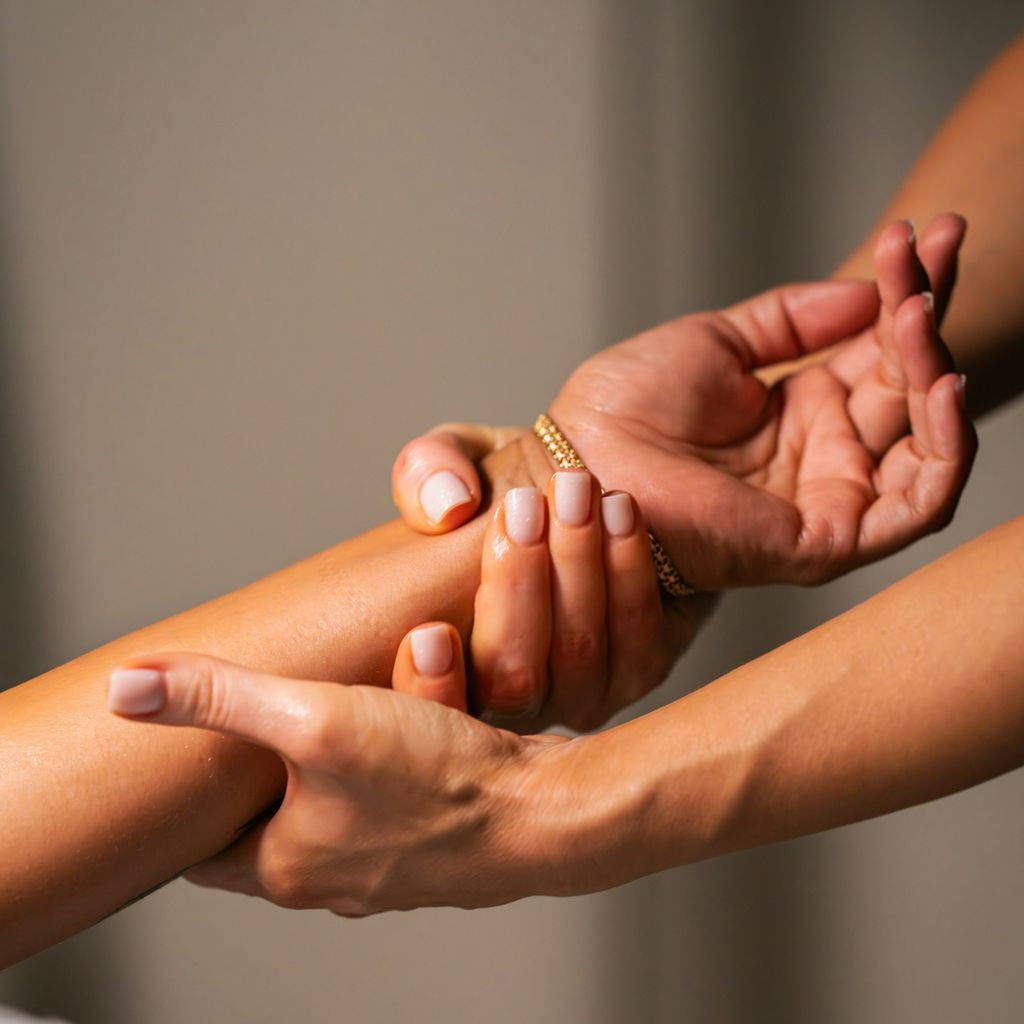
The body is remarkably good at getting the job done. When something hurts or stops working well, it finds another way. That's compensation, and in the short term it's exactly what you want.
The trouble is that the body doesn't always switch back once the injury heals.
How compensation starts
Sprain an ankle and you limp. Tweak your back and you move stiffly, bracing through your trunk. Strain a shoulder and you start reaching with your neck and upper back instead. Muscles around the injury tighten to protect it. That's guarding, and it's a sensible response.
Weeks later the original injury may be much better, but the guarding and the new movement habits can stay. The body has practiced the workaround hundreds of times a day. It has become the new normal.
Why it matters later
Compensation moves load to tissues that weren't built to carry it full-time. Over months or years that can show up as:
- Pain in a new area that seems unrelated to the old injury
- A sense that one side never feels quite the same
- Recurring strains in the same region
- Reduced range of motion that you've stopped noticing
- Fatigue or tightness in muscles that are doing extra work
I see this constantly: the low back that's really responding to an old ankle injury, or the neck tension that started after a shoulder problem years ago.
Where bodywork fits
Rehabilitation and strengthening are essential, and when an injury calls for physical therapy, that comes first. Clinical bodywork works alongside it by addressing the muscular, fascial and neuromuscular patterns that formed around the injury: tissue that is still guarding, restricted or overworked.
The goal isn't just to make an area feel looser for a day. It's to help the body let go of protective patterns it no longer needs, so movement can redistribute more evenly. Each session builds on what changed in the last one.
Signs it's worth looking at
- You've "recovered" from an injury but still move or feel differently on that side
- New pain has shown up somewhere nearby since the injury
- The same area keeps getting strained
- You're returning to sport or training and want to catch problems early
A note on timing
Acute injuries need appropriate medical care first. After surgery or significant injury, bodywork begins once you've been cleared, and it follows the pace your care team sets.
This article is general information about massage and bodywork, not medical advice. Evolve does not diagnose medical conditions or replace medical care, rehabilitation or physical therapy.
Let's understand what your body is telling you.
Call or text to schedule. By appointment only in a private South Charlotte studio.
704.905.9395